Electricity costs are an ongoing expense for Australian households and businesses. As more appliances become electric and technologies such as air conditioning, electric vehicles and home offices increase electricity demand, many property owners are looking for practical ways to reduce the amount of power they purchase from the grid.
Installing a properly designed solar system can help by generating electricity directly at your property during daylight hours. However, the amount you may save depends on how much electricity you use, when you use it, your solar system size and how effectively you use the electricity your panels generate.
At Nationwide Solar Pty Ltd, we provide complete solar solutions for Australian homes and businesses. With more than 10 years of solar industry experience, we understand that every property has different electricity requirements.
This guide explains how solar can help reduce electricity costs and what homeowners and businesses can do to make better use of their solar system.
How Solar Can Help Reduce Electricity Costs
Solar panels generate electricity from sunlight.
When your solar system is producing electricity, that energy can be used by appliances and equipment operating within your home or business.
If solar electricity is being used directly, you may need to purchase less electricity from the grid during that period.
For example, solar-generated electricity may help power:
- Air conditioning
- Refrigerators
- Washing machines
- Dishwashers
- Pool pumps
- Home office equipment
- Electric hot water
- EV chargers
- Lighting
- Business equipment
The more solar energy you can use directly while it is being generated, the greater the opportunity to reduce dependence on grid electricity.
Understand Your Electricity Usage
Before installing solar, it is important to understand how much electricity your property uses.
Your electricity bill provides useful information about your overall consumption.
However, you should also consider when that electricity is being used.
A household that uses significant electricity during the day may have a different solar opportunity from a household where most consumption occurs at night.
Similarly, a business operating from morning to late afternoon may naturally use more electricity during the same period that solar panels are generating power.
Understanding your daily usage pattern helps determine what type of solar system may be suitable.
Use More Electricity During Daylight Hours
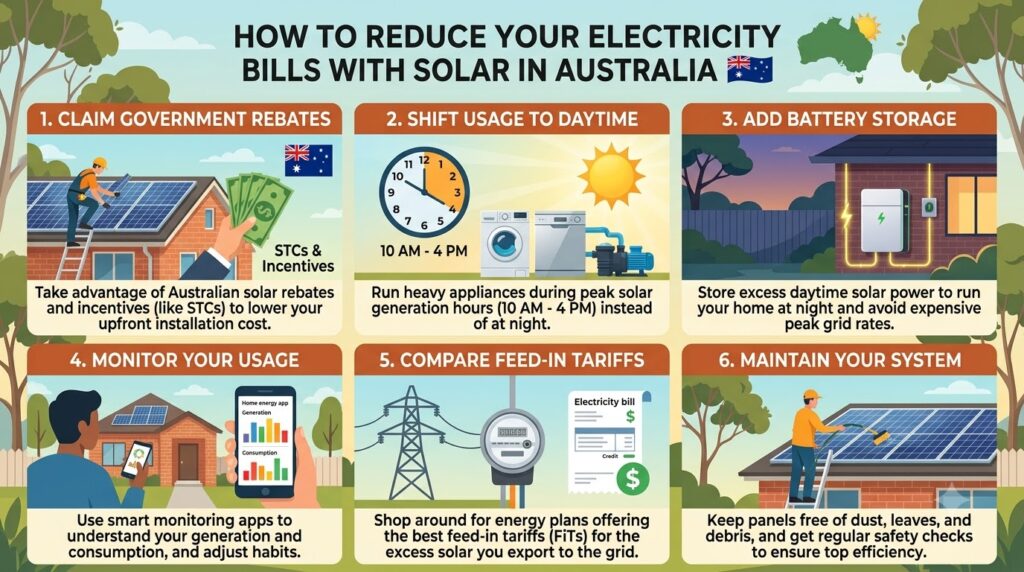
One way to make better use of rooftop solar is to shift suitable electricity consumption into daylight hours.
For residential properties, this may include operating appliances such as:
- Washing machines
- Dishwashers
- Pool pumps
- Electric hot water systems
- EV chargers
during periods when the solar system is generating electricity.
This does not mean every appliance needs to run at once.
Instead, the goal is to better align electricity use with solar generation where practical.
Businesses may already have an advantage because many commercial operations naturally consume electricity during daylight hours.
Choose the Right Solar System Size
Solar system size plays an important role in how much electricity can be generated.
A system that is too small may not produce enough energy to meet a meaningful portion of your daytime demand.
On the other hand, simply installing the largest possible system is not always the best solution.
The appropriate size depends on:
- Electricity consumption
- Daytime energy usage
- Available roof space
- Roof orientation
- Shading
- Budget
- Future energy requirements
- EV charging plans
- Battery plans
Nationwide Solar assesses these factors before recommending a suitable system.
Roof Orientation and Panel Placement
Where solar panels are positioned can influence when they generate electricity.
Different roof directions may receive sunlight at different times of the day.
For example, some roof sections may receive stronger morning sunlight while others receive more afternoon sun.
A good solar design can take this into account and consider how the home’s electricity usage changes throughout the day.
Panel placement should also account for shading and rooftop obstructions.
Avoid Excessive Shading
Shade can reduce the amount of sunlight reaching solar panels.
Potential shading sources include:
- Trees
- Nearby buildings
- Chimneys
- Roof structures
- Antennas
- Other rooftop equipment
Shading conditions should be reviewed before the system is designed.
Trees can also grow over time, which means shading may change after installation.
Regularly observing the property can help identify new shading issues that may affect solar generation.
Use Solar Monitoring
Many modern solar systems offer monitoring functionality.
Depending on the installed equipment, monitoring may allow you to see:
- Daily generation
- Historical solar production
- System performance
- Energy trends
Monitoring can help you understand when your solar system generates the most electricity.
This information may help you adjust household or business electricity usage to better match solar production.
For example, if your solar generation is strongest around midday, you may choose to schedule suitable appliances during that period.
Consider EV Charging During Solar Hours
Electric vehicles can significantly increase household electricity consumption.
If you charge an EV at home, the charging schedule can affect how much solar energy you use directly.
Where practical, charging during daylight hours may allow some of the vehicle’s energy requirements to be supplied by rooftop solar.
The amount of solar available depends on:
- System size
- Household consumption
- Vehicle charging requirements
- Weather
- Charging speed
- Time of day
Nationwide Solar can consider solar and EV charging together when planning a home energy system.
Should You Add Battery Storage?
Battery storage can allow some solar-generated electricity to be stored for later use.
This may be useful for households that generate electricity during the day but use significant amounts of power in the evening.
However, batteries should be assessed carefully.
Important factors include:
- Solar system size
- Available excess generation
- Evening electricity demand
- Battery capacity
- Electricity tariffs
- Budget
A battery is not automatically suitable for every property.
For some homeowners, using more solar electricity directly during the day may be the first priority.
Solar for Home Offices
Working from home can increase daytime electricity usage.
Computers, monitors, air conditioning, lighting and other office equipment may run for several hours during daylight periods.
This can create an opportunity to use rooftop solar electricity directly.
If you regularly work from home, this should be considered when reviewing your household energy consumption.
Solar for Businesses
Businesses can often have strong daytime electricity demand.
Commercial properties may use energy for:
- Lighting
- Computers
- Air conditioning
- Machinery
- Refrigeration
- Pumps
- Ventilation
- Production equipment
Because many of these loads operate during daylight hours, commercial solar may align well with normal business activity.
The right commercial system should still be designed around real electricity consumption and operating hours.
Reduce Unnecessary Energy Consumption
Solar can help reduce reliance on grid power, but energy efficiency can also play an important role.
Simple actions may include:
- Switching off unused lighting
- Using efficient appliances
- Managing air conditioning carefully
- Scheduling high-consumption equipment
- Monitoring unnecessary standby usage
Reducing avoidable consumption can make it easier for solar generation to cover a larger share of your actual energy needs.
Plan for Future Electricity Usage
Your electricity consumption may increase over time.
Future changes may include:
- Purchasing an EV
- Installing an EV charger
- Adding more air conditioning
- Installing a swimming pool
- Switching from gas to electric appliances
- Adding electric hot water
- Expanding a business
- Adding new machinery
These changes should be considered when designing a solar system.
A system selected only for today’s energy usage may not be suitable for future requirements.
Solar and Electricity Tariffs
Electricity tariffs can influence the financial outcome of a solar system.
The value of using solar electricity directly can depend on what you would otherwise pay for grid electricity.
Electricity plans, usage rates and export arrangements vary, so customers should review their current electricity plan when considering solar.
Nationwide Solar focuses on system design and energy requirements rather than making one general savings claim for every customer.
Actual savings vary depending on individual circumstances.
Why Professional Solar Design Matters
A solar system should be based on your property rather than a generic package.
A professional solar assessment can review:
- Electricity bills
- Energy usage patterns
- Roof space
- Roof orientation
- Shading
- Electrical infrastructure
- Future energy needs
- EV charging
- Battery plans
This helps create a system designed around how the property actually uses electricity.
Complete Solar Solutions for Australian Homes and Businesses
Nationwide Solar Pty Ltd manages the complete solar journey from initial assessment and system design through to professional installation and after-sales support.
Our services can include:
- Residential solar
- Commercial solar
- Energy usage assessment
- Property and roof review
- Custom solar system design
- Professional installation
- EV charger installation
- Solar integration planning
- Future battery considerations
- Bird mesh protection
- Solar monitoring guidance
- After-installation support
With more than 10 years of solar industry experience, we understand that every Australian property has different energy requirements.
Why Choose Nationwide Solar Pty Ltd?
Nationwide Solar takes a customised approach to solar.
We look at the complete energy requirements of your property before recommending a system.
Our assessment can consider:
- Current electricity consumption
- Daytime usage
- Roof conditions
- Solar exposure
- Available space
- Budget
- Future EV requirements
- Battery plans
This helps create a solar solution that is better aligned with your long-term energy goals.
Final Thoughts
Solar panels can help reduce electricity costs by generating power directly at your home or business during daylight hours.
However, the best results generally come from combining good system design with smart energy usage.
Understanding your electricity consumption, choosing an appropriately sized solar system, using more electricity during solar-producing hours and planning for EV charging or battery storage can all help you make better use of rooftop solar.
If you are considering solar for your home or business, Nationwide Solar Pty Ltd can assess your property, energy usage and future requirements before recommending a suitable solution.
Nationwide Solar Pty Ltd — Complete Solar Solutions for Australian Homes and Businesses.