
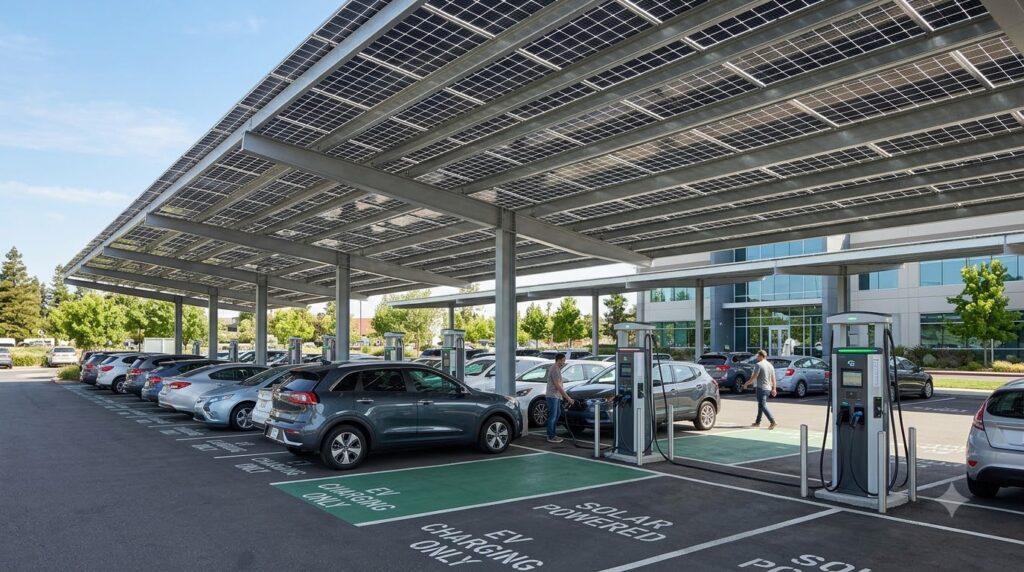
As electric vehicles become more common across Australia, many homeowners are starting to think about solar panels and EV chargers as part of the same home energy system.
Installing solar can help generate electricity during daylight hours, while a dedicated EV charger provides a convenient way to charge an electric vehicle at home. When these two technologies are planned together, homeowners can potentially make better use of their rooftop solar generation while preparing the property for future electricity requirements.
At Nationwide Solar Pty Ltd, we provide complete solar and EV charging solutions for Australian homes and businesses. With more than 10 years of solar industry experience, we understand that every household has different electricity consumption, driving habits, roof conditions and future energy plans.
This guide explains how solar panels and EV chargers can work together and what Australian homeowners should consider when planning a smarter home energy setup.
Why Combine Solar Panels with an EV Charger?
An electric vehicle can increase household electricity consumption significantly.
Instead of purchasing all of the electricity required for EV charging from the grid, homeowners with rooftop solar may be able to use some of their own solar-generated electricity.
The amount of solar energy available for EV charging depends on factors such as:
- Solar system size
- Household electricity consumption
- EV battery capacity
- Daily driving distance
- Charging time
- Weather conditions
- Roof orientation
- Charger settings
When solar and EV charging are planned together, the overall system can be designed with the vehicle’s future energy demand in mind.
How Solar-Powered EV Charging Works
Solar panels generate electricity during daylight hours.
That electricity is first available for use within the property.
If an electric vehicle is connected to a compatible charger while the solar system is generating power, some of the electricity used for charging may come directly from rooftop solar.
For example, if your solar system is producing more electricity than the rest of the home is using during the middle of the day, EV charging can potentially make use of some of that available generation.
If solar production is not sufficient to meet the full charging demand, additional electricity may be supplied from the grid.
Understand Your Daily Driving Requirements
Before choosing an EV charging solution, consider how you actually use your vehicle.
Someone travelling a short distance to work each day may require significantly less charging than someone driving long distances regularly.
Important questions include:
- How many kilometres do you typically drive?
- How often does the EV need charging?
- Is the vehicle parked at home during the day?
- Do you normally charge overnight?
- Will you purchase another EV later?
These factors help determine how much additional electricity your household may require.
Review Your Existing Solar System
If you already have rooftop solar, the next step is understanding whether your current system is suitable for your EV charging plans.
Consider:
- Existing solar system size
- Current household consumption
- Daytime solar generation
- Available surplus electricity
- Roof space for possible expansion
- Existing inverter
- Future battery plans
If your current solar system was installed several years ago, it may have been designed before EV charging was part of your household energy plan.
A system assessment can help determine whether the existing setup is appropriate for increased electricity demand.
Planning Solar for a Future EV
If you are installing solar now but do not yet own an electric vehicle, it can still be useful to plan ahead.
Electric vehicles can add significant electricity demand to a household.
When designing a new solar system, let your provider know if you expect to purchase an EV in the coming years.
This allows factors such as roof capacity, system size and overall electricity requirements to be considered early.
Future planning can be particularly useful if you expect to:
- Buy an electric vehicle
- Add a second EV
- Install battery storage
- Replace gas appliances with electric appliances
- Increase air conditioning use
- Add a swimming pool
Choosing the Right EV Charger
There are different types of EV chargers available, and the right option depends on both the vehicle and the property.
A charger assessment should consider:
- Vehicle make and model
- Charging compatibility
- Maximum vehicle charging capability
- Electrical capacity of the home
- Charger location
- Solar integration requirements
- Typical charging schedule
The most powerful charger is not always the most suitable charger.
If your vehicle spends many hours parked at home, a charger that comfortably replenishes your typical daily driving requirements may be sufficient.
Electrical Capacity Matters
An EV charger creates an additional electrical load.
Before installation, your home’s electrical setup should be reviewed.
This may include assessing:
- Switchboard
- Main electrical supply
- Existing large appliances
- Air conditioning
- Electric hot water
- Pool equipment
- Solar system
- Battery system
- Future electrical loads
A professional assessment can determine whether the existing setup is appropriate or whether additional electrical work may be required.
Where Should a Home EV Charger Be Installed?
The charger should ideally be positioned somewhere convenient for everyday use.
Common locations include:
- Garage wall
- Carport
- Driveway
- External wall near parking
- Dedicated parking area
The installation location may depend on the distance from the electrical supply and the way cables need to be routed.
A good installation should provide convenient vehicle access while keeping the setup neat and practical.
When Is the Best Time to Charge an EV with Solar?
If your goal is to maximise the use of rooftop solar, daytime charging is generally the most relevant option.
Solar production is usually strongest during daylight hours, although actual output depends on weather and system design.
Homeowners who:
- Work from home
- Have flexible working arrangements
- Leave their EV at home during the day
- Drive mainly in the evenings
- Have multiple vehicles
may find it easier to schedule charging during solar-producing hours.
What About Overnight EV Charging?
Many homeowners prefer overnight charging because the vehicle is parked for several hours.
However, solar panels do not generate electricity at night.
Without battery storage, overnight EV charging will generally depend on grid electricity.
This does not make overnight charging unsuitable; it simply means that households wanting to use direct solar electricity may need to consider their charging schedule.
Your electricity tariff may also influence when charging makes the most sense.
Should You Add a Home Battery?
Battery storage may be another part of a smarter home energy system.
A battery can store some solar-generated electricity for later use.
However, EV batteries can require a considerable amount of energy, so homeowners should carefully assess how a home battery would fit into the overall system.
Battery planning should consider:
- Household evening electricity use
- Solar generation
- Battery capacity
- EV charging requirements
- Electricity tariffs
- Budget
There is no single solar-battery-EV setup that works for every household.
Smart Charging Features
Depending on the EV charger and system configuration, smart charging features may provide greater control over when the vehicle charges.
Some systems may allow charging schedules to be set based on specific times.
This can help homeowners coordinate charging around:
- Solar generation
- Electricity tariffs
- Daily travel
- Household consumption
Available features differ between charger models, so charger selection should be based on actual household requirements.
Can You Add a Second EV Later?
Many households may eventually have more than one electric vehicle.
Two EVs can increase electricity demand considerably compared with a single vehicle.
If you believe a second EV is likely in the future, mention this during the solar and charger planning stage.
Considerations may include:
- Additional charging capacity
- Electrical supply
- Parking spaces
- Solar system size
- Battery requirements
- Charging schedules
Planning ahead can make future expansion easier.
Solar and EV Charging for Businesses
The same principles apply to commercial properties.
Businesses may require EV chargers for:
- Employees
- Customers
- Company vehicles
- Delivery vehicles
- Fleet vehicles
Commercial EV charging can increase a property’s electricity demand considerably, particularly when several vehicles charge at the same time.
Businesses with rooftop solar may choose to consider solar generation and EV charging together as part of a broader energy strategy.
Benefits of Combining Solar and EV Charging
Planning solar and EV charging together can provide several potential advantages.
These include:
- Greater use of rooftop solar electricity
- Reduced dependence on grid electricity during solar hours
- Convenient home EV charging
- Better planning for future electricity requirements
- Integration with battery storage
- More coordinated household energy management
Actual outcomes depend on the property, system size, vehicle and charging pattern.
Complete Solar and EV Charging Solutions
Nationwide Solar Pty Ltd manages the complete energy journey from initial assessment through to system design, professional installation and after-sales support.
Our solar and EV charging services can include:
- Household energy assessment
- Roof and property assessment
- Custom solar system design
- Professional solar installation
- EV and charger compatibility checks
- Electrical setup review
- EV charger recommendation
- Professional EV charger installation
- Solar integration planning
- Future battery considerations
- Monitoring guidance
- After-installation support
With more than 10 years of solar industry experience, we understand that every Australian property has different requirements.
Why Choose Nationwide Solar Pty Ltd?
Nationwide Solar takes an integrated approach to home energy.
Instead of treating solar panels, EV chargers and batteries as completely separate systems, we consider how each component may work together.
We assess:
- Electricity consumption
- Roof space
- Vehicle requirements
- Electrical capacity
- Charging habits
- Future energy plans
This helps create a more practical solution for the individual home.
Final Thoughts
Solar panels and EV chargers can work well together when they are planned around the household’s real electricity requirements.
Rooftop solar can generate electricity during daylight hours, while a dedicated EV charger provides a practical way to charge your vehicle at home.
If you already own an EV, are planning to buy one, or expect your household electricity use to increase in the future, it is worth considering solar and EV charging as part of one broader energy strategy.
A professional assessment can help determine the right solar system size, EV charger and installation setup for your property.
Nationwide Solar Pty Ltd — Complete Solar and EV Charging Solutions for Australian Homes and Businesses.