
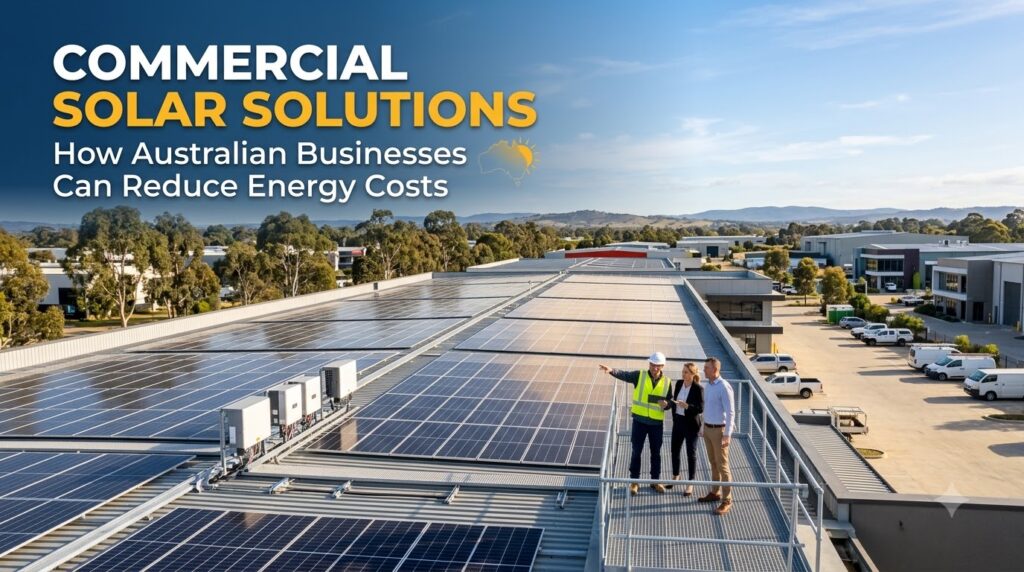
For many Australian businesses, electricity is a significant ongoing operating expense. Offices, retail stores, warehouses, workshops and industrial facilities often use substantial amounts of power during the day, particularly for lighting, air conditioning, refrigeration, computers, machinery and other equipment.
Commercial solar can help businesses reduce their dependence on grid electricity by generating power on-site during daylight hours. However, the right solar system should be designed around the way the business actually operates.
At Nationwide Solar Pty Ltd, we provide commercial solar solutions for Australian businesses with different energy requirements, property types and future growth plans. With more than 10 years of solar industry experience, we understand that commercial solar needs careful planning, practical system design and professional installation.
This guide explains how commercial solar works, what businesses should consider before installation and how the right system can become part of a broader long-term energy strategy.
What Is Commercial Solar?
Commercial solar refers to solar power systems designed for business properties rather than residential homes.
These systems may be installed on:
- Office buildings
- Retail stores
- Warehouses
- Workshops
- Factories
- Industrial sites
- Commercial facilities
- Large business premises
Commercial systems are often larger than residential systems because business properties typically use more electricity and may have larger roof areas.
The key difference, however, is not just size. Commercial solar should be designed around operating hours, business energy demand, roof space, electricity tariffs and future electricity requirements.
Why Commercial Solar Can Suit Australian Businesses
Many businesses use the majority of their electricity during daylight hours.
That can make solar particularly relevant because solar systems generate electricity during the same period.
For example, an office may run computers, lighting and air conditioning throughout the day. A retail store may use refrigeration, lighting and point-of-sale systems. A warehouse may operate equipment, ventilation and machinery during normal business hours.
When solar generation and business electricity use occur at the same time, more of the generated electricity may be consumed directly on-site.
This can help reduce the amount of electricity purchased from the grid.
Actual savings depend on the business, system design, electricity tariff and usage pattern, which is why a proper energy assessment should always come first.
Start with a Business Energy Assessment
Before installing commercial solar, it is important to understand how the property uses electricity.
A business energy assessment can help identify:
- Total electricity consumption
- Daytime electricity usage
- Peak demand periods
- Operating hours
- Seasonal changes in energy use
- Major equipment loads
- Air conditioning demand
- Refrigeration requirements
- Machinery usage
- Current electricity tariffs
- Future expansion plans
At Nationwide Solar, we review these factors before recommending a suitable commercial solar solution.
A business that operates mainly during the day may require a different system from a site that runs across multiple shifts or uses a large amount of electricity at night.
Consider the Commercial Property Itself
The property also plays a major role in the solar design.
Commercial roofs can vary significantly in size and complexity. Some warehouses have large open roof areas, while offices and retail buildings may have skylights, ventilation systems, air conditioning units and other rooftop equipment.
Important factors include:
- Available roof area
- Roof orientation
- Roof condition
- Shading
- Existing rooftop equipment
- Access requirements
- Electrical infrastructure
- Inverter location
- Cable routes
- Future expansion possibilities
A detailed commercial property review helps create a solar layout that is practical and suited to the site.
Match Solar Generation to Business Energy Use
Commercial solar should ideally be designed around the business’s actual electricity profile.
It is not always about installing the largest possible system.
For example, a business with high daytime electricity use may benefit from a system designed to generate power during operating hours. A business with more limited daytime demand may require a different approach.
Matching solar generation with electricity consumption can help increase the amount of solar energy used directly by the business.
This is one of the most important factors when planning a commercial solar system.
Commercial Solar for Offices
Office buildings can be well suited to solar because electricity use often occurs during daylight hours.
Typical office energy consumption may include:
- Computers
- Servers
- Lighting
- Air conditioning
- Elevators
- Kitchen equipment
- Printers
- Other workplace technology
A properly planned solar system can help supply some of this daytime demand.
The correct system size depends on building usage, available roof space and electricity consumption.
Commercial Solar for Retail Businesses
Retail properties often have significant and consistent daytime electricity demand.
Common electrical loads may include:
- Lighting
- Air conditioning
- Refrigeration
- Display equipment
- Point-of-sale systems
- Signage
- Security systems
For supermarkets, showrooms and other larger retail sites, electricity usage may be particularly high.
Commercial solar can be designed around these operating patterns and form part of a broader energy management strategy.
Warehouse Solar Solutions
Warehouses often offer large roof areas, which can make them attractive for commercial solar.
However, roof size alone should not determine the system design.
A warehouse solar assessment should also consider:
- Business operating hours
- Electricity consumption
- Roof structure
- Roof orientation
- Shading
- Existing equipment
- Future growth
Some warehouses have relatively low electricity use, while others operate machinery, refrigeration or other equipment with much higher energy demand.
The system should reflect how the site actually operates.
Industrial Solar Systems
Industrial properties can have more complex energy requirements.
Factories and industrial facilities may use:
- Heavy machinery
- Motors
- Pumps
- Ventilation systems
- Manufacturing equipment
- Refrigeration
- Compressed air systems
- Process equipment
These loads can create high and variable electricity demand.
Commercial solar for industrial properties requires careful assessment of both the site and the energy profile.
A custom system design can help align solar generation with the property’s operations.
Professional Commercial Solar Design
Good system design is one of the most important parts of a commercial solar project.
The design should consider:
- Solar panel placement
- System size
- Inverter requirements
- Equipment location
- Roof access
- Electrical infrastructure
- Future energy demand
- Battery considerations
- EV charging plans
At Nationwide Solar Pty Ltd, we do not use a one-size-fits-all approach.
Each commercial system is planned around the business, the property and the future energy strategy.
Installation Scheduling to Reduce Disruption
Business continuity is important during commercial solar installation.
Retail stores may need to remain open for customers. Warehouses may need to maintain delivery access. Offices need to continue normal operations.
Commercial solar installation therefore requires more coordination than many residential projects.
Where practical, Nationwide Solar works with customers to schedule installation activities around business requirements.
The goal is to complete the project efficiently while reducing unnecessary disruption.
Consider Future Battery Storage
Battery storage may become part of a commercial property’s future energy strategy.
Even if a business is not installing a battery immediately, it can still be useful to discuss battery plans during the solar design stage.
Battery suitability depends on factors such as:
- Solar generation
- Electricity consumption
- Operating hours
- Energy use outside daylight hours
- Electricity tariffs
- Business objectives
Planning early can help businesses make more informed decisions about their overall system.
Plan for EV Charging
Electric vehicle charging is becoming more relevant for businesses across Australia.
Commercial properties may eventually need charging for:
- Company vehicles
- Staff vehicles
- Customer vehicles
- Delivery vehicles
- Electric fleets
EV charging can increase electricity demand, so future charging requirements should be considered during the solar planning process.
If your business expects to add EV chargers later, Nationwide Solar can include this in the overall energy assessment.
Commercial Solar and Long-Term Business Growth
Businesses rarely stay exactly the same.
Future changes may include:
- New machinery
- Additional staff
- Longer operating hours
- Larger premises
- Increased production
- More refrigeration
- EV fleet expansion
- Battery storage
- New electrical equipment
These changes can increase electricity consumption.
Discussing future growth during the initial solar consultation can help create a system that is better aligned with long-term business requirements.
Ongoing Monitoring and Support
Commercial solar does not end with installation.
Monitoring can help businesses understand how much electricity the system is generating and how it is performing over time.
Depending on the installed equipment, monitoring may provide useful information about solar production and system operation.
Nationwide Solar also provides ongoing support and system guidance where required.
This can be particularly useful for businesses as their energy usage changes over time.
How Commercial Solar Can Help Reduce Energy Costs
The main way commercial solar can help reduce electricity costs is by generating power on-site.
When the business uses solar electricity directly, it may reduce the amount of energy purchased from the grid during that period.
The actual financial benefit depends on several factors, including:
- System size
- Solar production
- Electricity tariffs
- Business operating hours
- Daytime consumption
- Roof orientation
- Shading
- Amount of solar used on-site
For this reason, commercial solar should always be assessed on a property-specific basis.
Complete Solar Solutions for Australian Businesses
Nationwide Solar Pty Ltd manages the complete commercial solar journey from initial assessment through to system design, professional installation and after-sales support.
Our commercial solar service can include:
- Business energy assessment
- Commercial property review
- Electricity usage analysis
- Custom solar system design
- Professional installation
- Installation scheduling
- Solar monitoring guidance
- Future battery planning
- EV charging considerations
- Ongoing support
With more than 10 years of solar industry experience, we understand that every business has different energy requirements.
Why Choose Nationwide Solar Pty Ltd?
Nationwide Solar takes a practical and customised approach to commercial solar.
We consider the complete property and energy profile rather than recommending a generic system.
Our experience allows us to work with different commercial environments, including offices, retail businesses, warehouses and industrial properties.
From planning through to installation and support, our goal is to provide a clear and coordinated solar solution.
Final Thoughts
Commercial solar can be a practical option for Australian businesses that use significant electricity during the day and want to reduce their reliance on grid power.
The most important step is choosing a system based on real business energy requirements rather than simply selecting the largest available package.
A good commercial solar solution should consider electricity consumption, roof space, operating hours, shading, future growth, battery plans and EV charging requirements.
If your business is considering solar, Nationwide Solar Pty Ltd can assess your property and energy usage before recommending a suitable commercial solar solution.
Nationwide Solar Pty Ltd — Complete Solar Solutions for Australian Homes and Businesses.